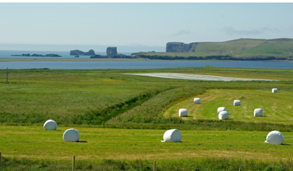
For contract balers in South Australia’s Mid North, every bale wrap roll must provide reliable coverage without wasting film. High-pre-stretch wrapping can increase roll mileage, but pushing pre-stretch from 55% to 70% requires careful attention to film quality, wrapper settings, and paddock conditions. This is especially important when working across cereal stubble, where sharp stems and rough residue can increase the risk of punctures.
Understanding the silage bale wrap stretch percentage efficiency SA contractors can realistically achieve helps operators balance film yield, bale protection and wrapping speed. The goal is not simply to stretch the film further, but to achieve consistent coverage while maintaining the barrier needed for quality silage preservation.
Understanding 55% vs 70% Pre-Stretch
Pre-stretch refers to how much a film is mechanically elongated before it is applied around the bale. At 55%, the film is stretched substantially while retaining a useful level of thickness and resilience.
Moving towards 70% can increase the amount of bale wrap obtained from each roll because the film covers more area before reaching the bale. However, higher stretch places greater demands on the film’s formulation, elasticity and the wrapper’s pre-stretch unit.
For example, a contractor should not assume that increasing the wrapper setting automatically improves overall efficiency. If excessive stretching causes film breaks, uneven coverage or weak areas, the apparent gain in roll mileage can quickly be lost.
When 70% Stretch Makes Sense
A 70% setting may be suitable when using a high-quality agricultural film technology specifically designed for high pre-stretch applications. The film needs sufficient elasticity and tear resistance to maintain a consistent layer after leaving the rollers.
Before increasing the setting, contractors should consider:
● Film specification: Confirm the manufacturer’s recommended pre-stretch range.
● Bale density: Dense, well-formed bales place different demands on the film than loose or irregular bales.
● Stubble conditions: Sharp wheat and barley residue can increase puncture hazards.
● Wrapper condition: Worn or poorly aligned pre-stretch rollers can produce inconsistent stretching.
● Weather: Heat can affect film handling and elasticity during field operations.
The practical target is consistent film application, not the highest possible stretch percentage.
Protecting Bale Wrap on Stubble Paddocks
South Australian Mid North contractors commonly work around cereal production areas where wheat and barley stubble can create a challenging wrapping environment. A high-pre-stretch setting should therefore be matched with adequate puncture resistance.
If the film becomes too thin at high stretch, sharp stubble can create small holes or tears. These defects can compromise the airtight seal required for effective fermentation and increase the risk of oxygen entering the bale.
This is where the efficiency of silage bale wrap stretch percentage in SA operations needs to be considered more than roll yield. A slightly lower pre-stretch setting may improve overall efficiency by reducing film failures and bale damage.
Optimising Wrapper Settings
Contractors should adjust settings systematically rather than changing several at once. Start with the film manufacturer’s recommended range, then inspect completed bales for consistent overlap, tension and surface coverage.
Check for These Warning Signs
● Film breaks during wrapping
● Excessive necking or thinning
● Uneven overlap between layers
● Loose film around bale edges
● Visible punctures after wrapping
● Inconsistent tension between bales
If these problems appear after increasing pre-stretch, return to the previous setting and determine whether the issue is due to film selection, wrapper setup, or field conditions.
Balancing Mileage and Bale Protection
The most efficient bale wrap strategy delivers dependable protection with the lowest practical film use. A theoretical increase in roll mileage has limited value if more film is consumed repairing breaks or if damaged bales require additional handling.
For Mid North contractors, this means treating 55% and 70% pre-stretch as operating points rather than fixed targets. The correct setting depends on the film, wrapper, bale characteristics and paddock conditions.
Conclusion
High-pre-stretch wrapping can improve bale wrap yield and reduce film consumption when the entire wrapping system is correctly matched. A 55% setting may provide a useful balance for demanding stubble conditions, while 70% can be considered when the film and equipment are designed to handle higher stretch.
For reliable results, test settings methodically and prioritise coverage, puncture resistance and seal integrity alongside roll mileage. Choose a bale wrap product suited to your wrapper and South Australian operating conditions, then follow the manufacturer’s recommended application settings.
—
FAQs
1. What does 55% pre-stretch mean for bale wrap?
It means the film is mechanically elongated by approximately 55% before being applied to the bale, increasing its coverage compared with unstretched film.
2. Is 70% pre-stretch better than 55%?
Not automatically. Higher stretch can improve film yield, but the film, wrapper and paddock conditions must support it without increasing breaks or punctures.
3. Why is puncture resistance important on South Australian stubble?
Sharp wheat and barley stubble can damage stretched film. Adequate puncture resistance helps maintain the sealed environment required for silage preservation.
4. How can contractors improve bale wrap efficiency?
Use film within its recommended stretch range, maintain the wrapper’s pre-stretch components and inspect bales for consistent tension, overlap and damage.
5. Should every contractor use 70% pre-stretch?
No. The appropriate setting depends on the specific film, wrapper, bale characteristics and field conditions. Follow the film manufacturer’s recommendations and adjust only after checking wrapping performance.